Substack vs Mailchimp: Who Truly Owns Your List?
Explore the ownership dynamics of your subscriber list across platforms.
Discover how Substack, Beehiiv, Mailchimp, and Kit handle subscriber list ownership and which platform best suits your needs.
In the digital marketing landscape, owning your subscriber list is crucial. While platforms like Substack and Mailchimp offer unique advantages, understanding who truly owns your list can influence your choice. This article compares Substack, Beehiiv, Mailchimp, and Kit, highlighting their strengths and limitations.
How Does Substack Handle Audience Ownership?
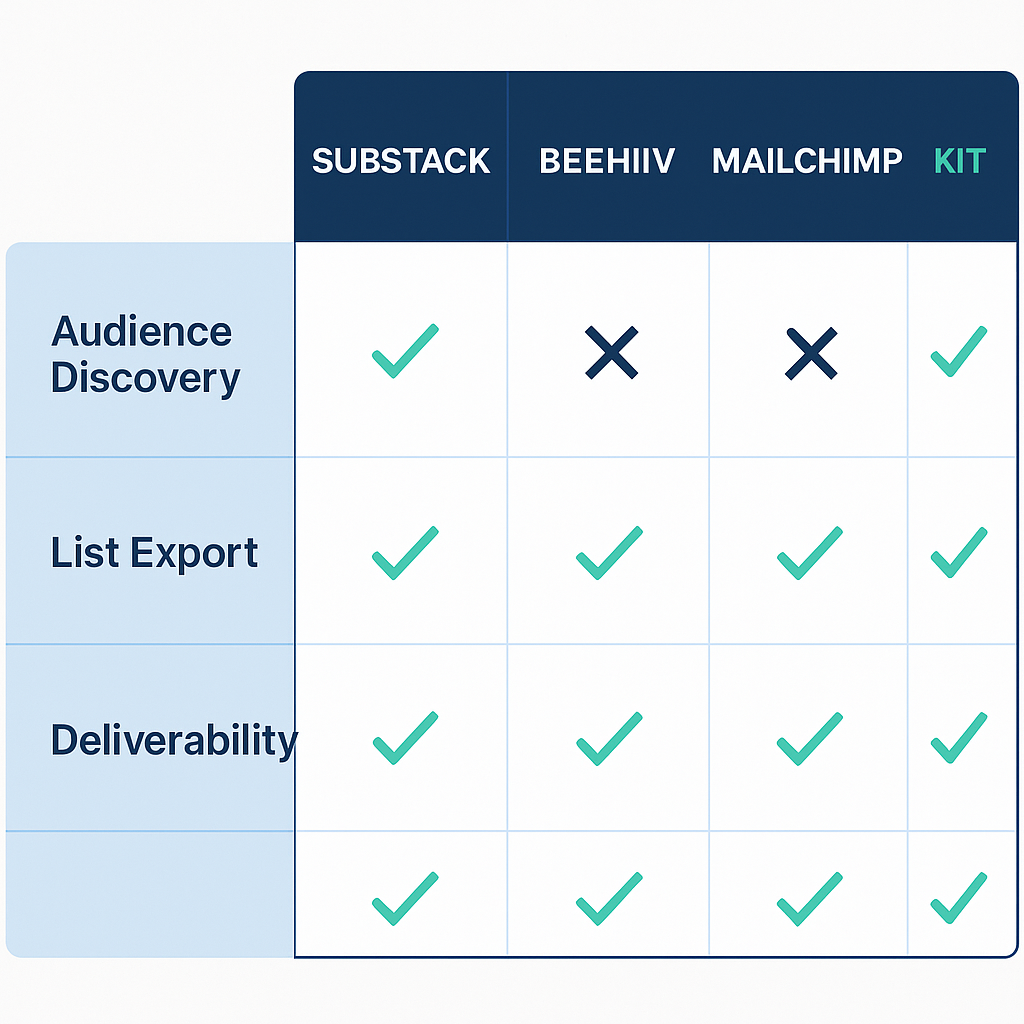
Substack is renowned for its audience discovery capabilities, allowing writers to build a following directly on the platform. However, this convenience comes with a trade-off: dependency on Substack for audience engagement and monetization. While you can export your subscriber list, the platform's ecosystem encourages keeping your audience within its confines, potentially limiting your control.
Is Beehiiv a Better Option for List Independence?
Beehiiv offers a robust product for newsletter creation and management, but it operates as a separate silo. This means that while it provides excellent tools, it may not integrate seamlessly with other marketing platforms you use. Beehiiv allows for list exportation, giving you more control over your subscriber data compared to Substack.
Does Mailchimp Offer Superior Deliverability?
Mailchimp is a mature platform known for its reliable deliverability infrastructure, making it a preferred choice for large-scale email campaigns. It prices its services based on the number of contacts, regardless of engagement levels, which can lead to increased costs as your list grows. However, Mailchimp provides full ownership of your subscriber list, allowing for easy export and integration with other tools.
How Does Kit Compare in Terms of List Management?
Kit, similar to Mailchimp, offers comprehensive features for managing email lists and campaigns. It also charges based on contact count, which can be a consideration for budget-conscious users. Like Mailchimp, Kit allows for full ownership and export of your subscriber list, providing flexibility and control over your data.
What Makes SoftSolz Newsletter Unique?
SoftSolz Newsletter positions itself as an integrated solution where the list, blog, forms, and audit logs coexist in the same workspace. This integration can be a significant advantage for teams looking for a streamlined workflow. While SoftSolz is still developing its deliverability infrastructure, it is transparent about using a third-party provider for email sending, building trust with potential users.
Which Should You Choose?
For those prioritizing audience discovery, Substack is a strong contender, albeit with platform dependency. Beehiiv offers more independence but may lack integration. Mailchimp and Kit provide robust deliverability and list ownership, ideal for large-scale campaigns. SoftSolz is perfect for teams seeking an integrated workspace, despite its developing infrastructure.
FAQ
What is the main advantage of Substack?
Substack excels in audience discovery, allowing writers to build a following directly on the platform.
Can I export my list from Beehiiv?
Yes, Beehiiv allows for list exportation, giving you more control over your subscriber data.
Why is Mailchimp known for deliverability?
Mailchimp is renowned for its reliable deliverability infrastructure, making it ideal for large-scale email campaigns.
Does Kit offer list export options?
Yes, Kit allows for full ownership and export of your subscriber list, providing flexibility and control over your data.
What sets SoftSolz Newsletter apart?
SoftSolz offers an integrated solution where the list, blog, forms, and audit logs coexist in the same workspace.
Is SoftSolz's deliverability infrastructure reliable?
SoftSolz is still developing its deliverability infrastructure but is transparent about using a third-party provider for email sending.
Discussion
Loading responses…