Admin vs. Member: Why It's Not Enough for Access Control
Explore a robust permission model beyond basic roles.
Discover why 'Admin' and 'Member' roles fall short in access control and how a comprehensive model can enhance security and efficiency.
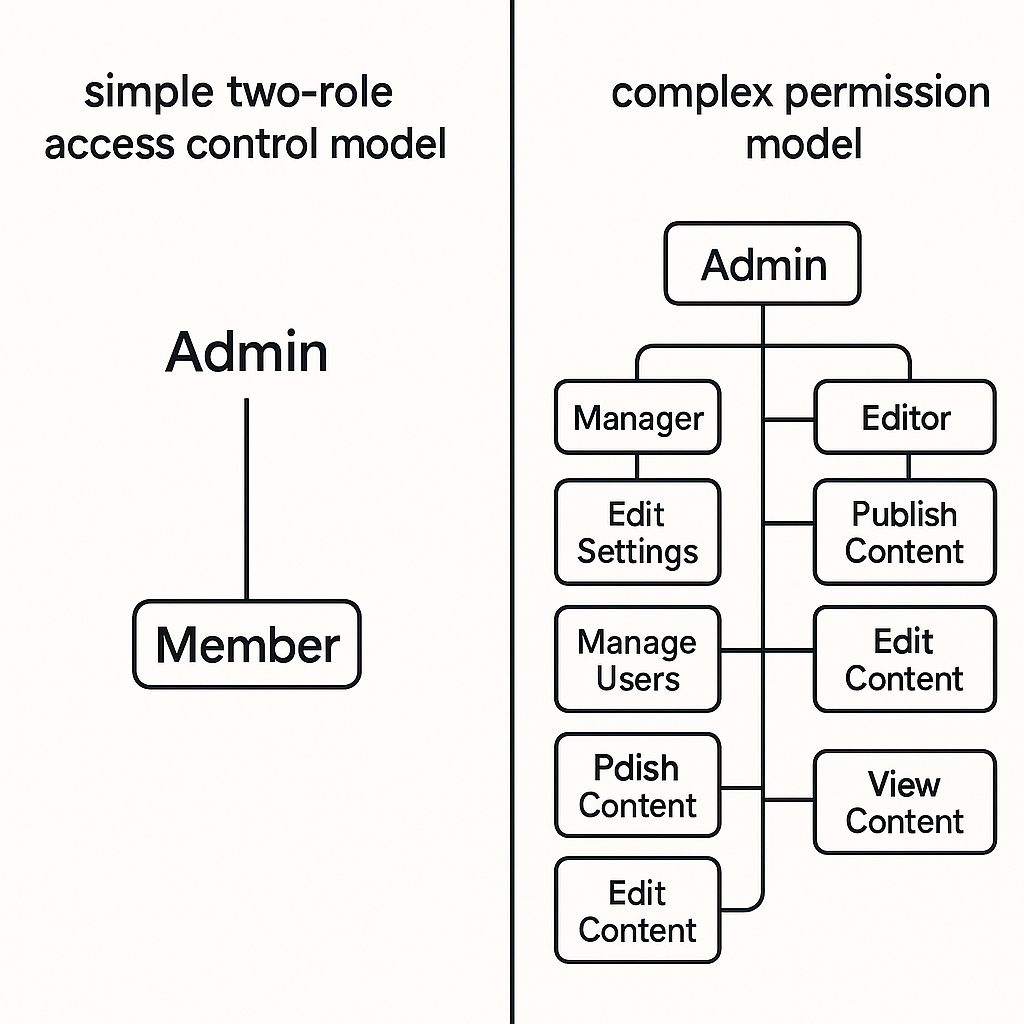
In the realm of small to medium-sized business (SMB) tools, the default access control model often consists of just two roles: 'Admin' and 'Member'. While this may seem straightforward, it falls short in providing the nuanced control necessary for modern business operations. A robust permission model includes system roles, custom roles, and permission codes scoped per service and action, offering a more secure and efficient solution.
What Are the Limitations of 'Admin' and 'Member' Roles?
The 'Admin' and 'Member' roles are overly simplistic, often leading to over-granting of permissions or forcing businesses to upgrade to more expensive plans. This binary model lacks the flexibility to accommodate different levels of access and responsibility within an organization.
- Over-Granting Permissions: With only two roles, businesses often end up giving too much access to users who don't need it, increasing security risks.
- Costly Upgrades: To achieve more granular control, businesses are often pushed to purchase enterprise-level plans, which can be cost-prohibitive for SMBs.
What Does a Comprehensive Permission Model Look Like?
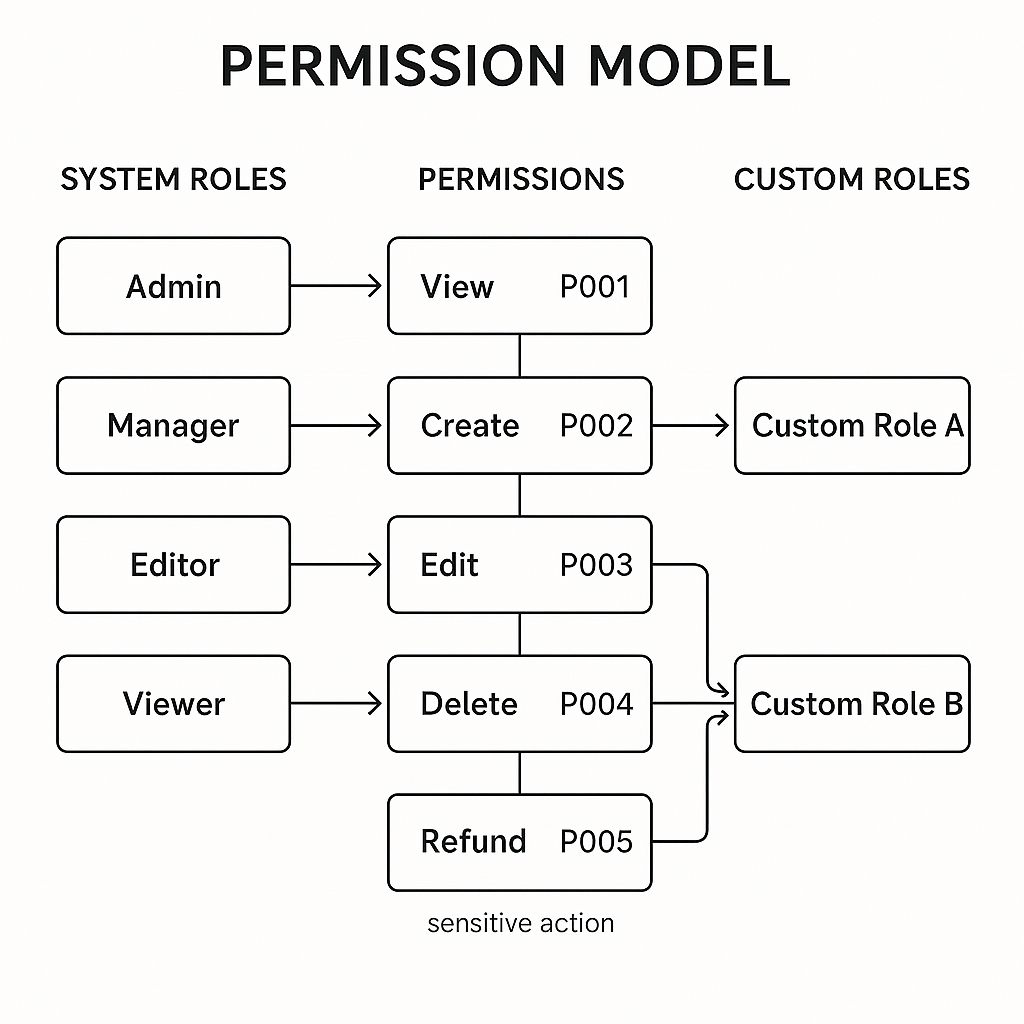
A comprehensive permission model goes beyond the basic roles to include system roles, custom roles, and permission codes. This model allows for precise control over who can access what, and what actions they can perform.
- System Roles: Predefined roles that come with the platform, offering a baseline of permissions.
- Custom Roles: Tailored roles that businesses can create to fit their specific needs.
- Permission Codes: Detailed permissions scoped per service and action, such as view, create, edit, delete, and sensitive actions like refunds.
- Platform-Level Permissions: Permissions that a tenant admin cannot grant themselves, ensuring a higher level of security.
- AI Limits: Per-role AI usage limits to prevent misuse of resources, such as a junior member exhausting AI credits.
How Does This Model Affect Pricing?
In many tools, granular permissions are an enterprise upsell, meaning businesses must pay more for the flexibility they need. However, platforms like SoftSolz offer these features across all plans, making them accessible to SMBs without the hefty price tag.
Here's a comparison of the two models:
| Feature | Basic Model | Comprehensive Model |
|---|---|---|
| Roles | Admin, Member | System Roles, Custom Roles |
| Permission Codes | None | Scoped per service and action |
| Platform-Level Permissions | Not available | Available |
| AI Limits | Not available | Per-role limits |
| Pricing | Enterprise upsell | Available on all plans |
Which Should You Choose?
For businesses seeking flexibility and security without breaking the bank, a comprehensive permission model is the way to go. It provides the necessary control over access and actions, ensuring that each user has the appropriate level of access. Platforms like SoftSolz make this model accessible to SMBs, offering advanced features without the need for costly upgrades.
FAQ
What are the risks of using only 'Admin' and 'Member' roles?
Using only 'Admin' and 'Member' roles can lead to over-granting permissions, increasing security risks, and forcing costly plan upgrades for more control.
How do custom roles enhance security?
Custom roles allow businesses to tailor access levels to specific needs, reducing the risk of unauthorized access and enhancing overall security.
What are permission codes?
Permission codes are detailed permissions scoped per service and action, allowing precise control over what users can view, create, edit, delete, or perform.
Why are platform-level permissions important?
Platform-level permissions ensure that certain critical permissions cannot be self-granted by tenant admins, adding an extra layer of security.
How do AI limits work?
AI limits are set per role to prevent misuse of AI resources, ensuring that no single user can exhaust the month's AI credits prematurely.
Is a comprehensive permission model cost-effective?
Yes, platforms like SoftSolz offer comprehensive permission models across all plans, making them cost-effective for SMBs without requiring expensive upgrades.
Discussion
Loading responses…